This is the first instalment in a four-part series exploring why getting genetics right is the single highest-leverage decision in a regenerative Angus operation. Each issue builds on the last — from cow efficiency, to system fit, grass production, and the hidden biological constraints underneath it all.
The beef industry today has access to more genetic information than at any time in history. Estimated Breeding Values, genomic testing, carcase data and increasingly sophisticated selection indexes give producers powerful tools to guide breeding decisions. Yet despite all of this progress, many producers feel something unusual has happened. The signals coming from different parts of the industry do not always line up.
- Suits high-input systems
- Higher maintenance cost
- Lower stocking rate
- Higher stocking rate
- Lower maintenance cost
- More efficient
The show ring rewards one type of animal. Genetic evaluations emphasise certain traits. Feedlots look for predictable performance. Processors focus on carcase outcomes.
Each of these signals matters. But they do not always point in the same direction.
For producers trying to build profitable cow herds in real environments, navigating those competing signals has become one of the biggest challenges in modern cattle breeding.
And when those signals become confusing, the simplest way to find clarity is to return to the fundamentals of how commercial beef systems actually make money.
The Genetic Swings of the Past 50 Years
Over the past half-century the beef industry has moved through several strong genetic phases. Each phase delivered real progress. But each also showed the risks of chasing one objective too aggressively.
The Frame Score Boom
The industry became fascinated with larger-framed cattle. Show rings rewarded tall, powerful animals with long skeletons and big frames. Exotic breed influence entered many herds, and the prevailing belief was simple: bigger cattle meant more growth potential and heavier carcases.
For a time the approach worked. Carcase weights increased and the industry produced more beef even while cow numbers declined.
The Growth Race
The focus shifted toward growth. Improved EBVs and selection indexes rewarded higher weaning weights, yearling weights and post-weaning gain. Feedlot performance became a major driver of breeding decisions. Steers finished faster, feedlots improved efficiency and carcase weights continued to climb.
The Marbling Push
Breeding attention shifted toward eating quality. Premium export markets and branded beef programs place significant value on marbling and intramuscular fat. Genetic selection for IMF has delivered impressive progress — a genuine success story for the industry.
Each phase improved something. But each time one signal dominated breeding decisions, the system eventually felt the consequences somewhere else.
The Producer Caught in the Middle
Today breeding decisions are influenced by several parts of the supply chain, and for commercial producers the signals can be confusing.
The Show Ring
Rewards phenotype. But the bull that wins the ribbon may produce daughters that are expensive to run.
Genetic Evaluations
Highlight individual trait performance. But the bull with the highest EBVs may not suit the environment.
Feedlots
Focus on growth and feed efficiency. But feedlot-optimised genetics do not always build efficient cow herds.
Processors
Focus on carcase specifications and eating quality. But the bull bred purely for marbling may sacrifice yield.
Meanwhile the cow herd still has to function within the realities of climate, pasture and feed availability.
Which brings the conversation back to a simple question:
“What type of cow actually makes the most money?”
The Most Profitable Cow
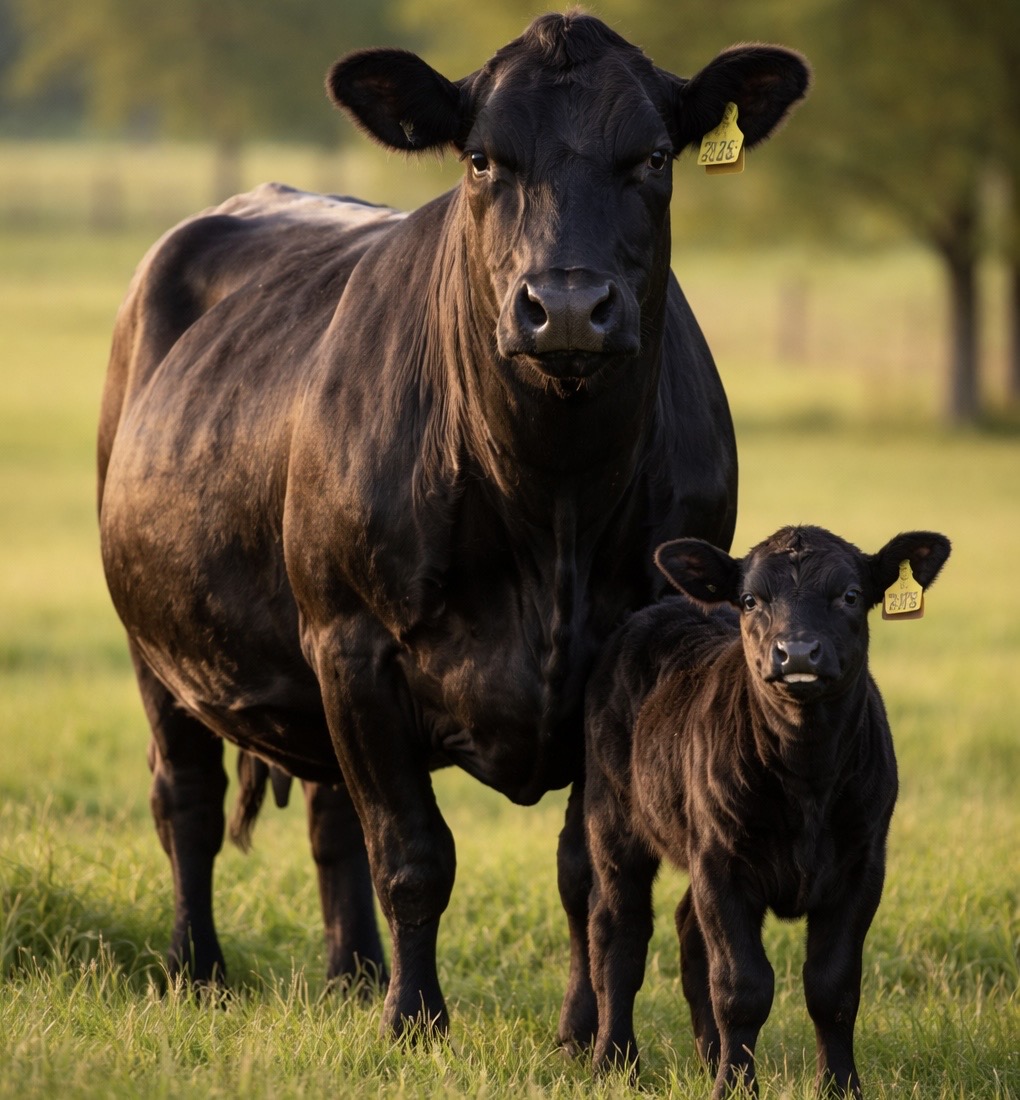
In most grazing systems, the cow that quietly drives long-term profitability isn’t necessarily the biggest — she’s the one whose size matches her output.
A big cow that weans a big calf is doing her job. But when cow size increases without a proportional increase in calf weight, the extra frame is just extra cost. The most profitable cow is large enough to raise a strong calf, but not so large that maintenance requirements consume the margin.
Data from Angus Australia’s TransTasman Angus Cattle Evaluation (TACE) indicates average mature cow weight sits around ~570 kg across large contemporary datasets, with many commercial herds now operating well above that level. That figure has steadily increased over the past two decades as breeders selected strongly for growth traits.
Many commercial herds today run cows in the 550–650 kg range, and in some high-growth bloodlines mature cows can exceed 700 kg, with some individuals pushing 750–800 kg in favourable conditions.
There’s nothing wrong with a big cow — if she performs proportionally. Every producer would love it if all their big cows produced big, sappy calves ready for the butcher shop. Many leading Angus studs prove it’s possible — large-framed cows that wean heavy calves and do it year after year. In high-rainfall, high-input systems with abundant feed, these cattle absolutely earn their place.
But a lot of the time, they don’t. Cow size increases without a matching increase in calf output. A 650 kg cow should be weaning a proportionally heavy calf — but when she’s weaning the same weight as a 550 kg cow, the extra size is just extra cost. Across a breeding herd, those unearned maintenance requirements quickly become one of the largest cost drivers in the entire system — particularly in pasture-based operations where feed isn’t unlimited.
That’s why BeefAI™ was built. Not to dismiss big cows — but to find out whether they actually perform proportionally, and to find the bulls that make them.
Same Land, Different Outcomes
| Cow Type | Mature Weight | Stocking Rate | Weaning Output |
|---|---|---|---|
| Larger cows | 650–700 kg | 1 cow / ha | ~300 kg calf / ha |
| Moderate cows | 550–580 kg | 1.15 cows / ha | ~320 kg calf / ha |
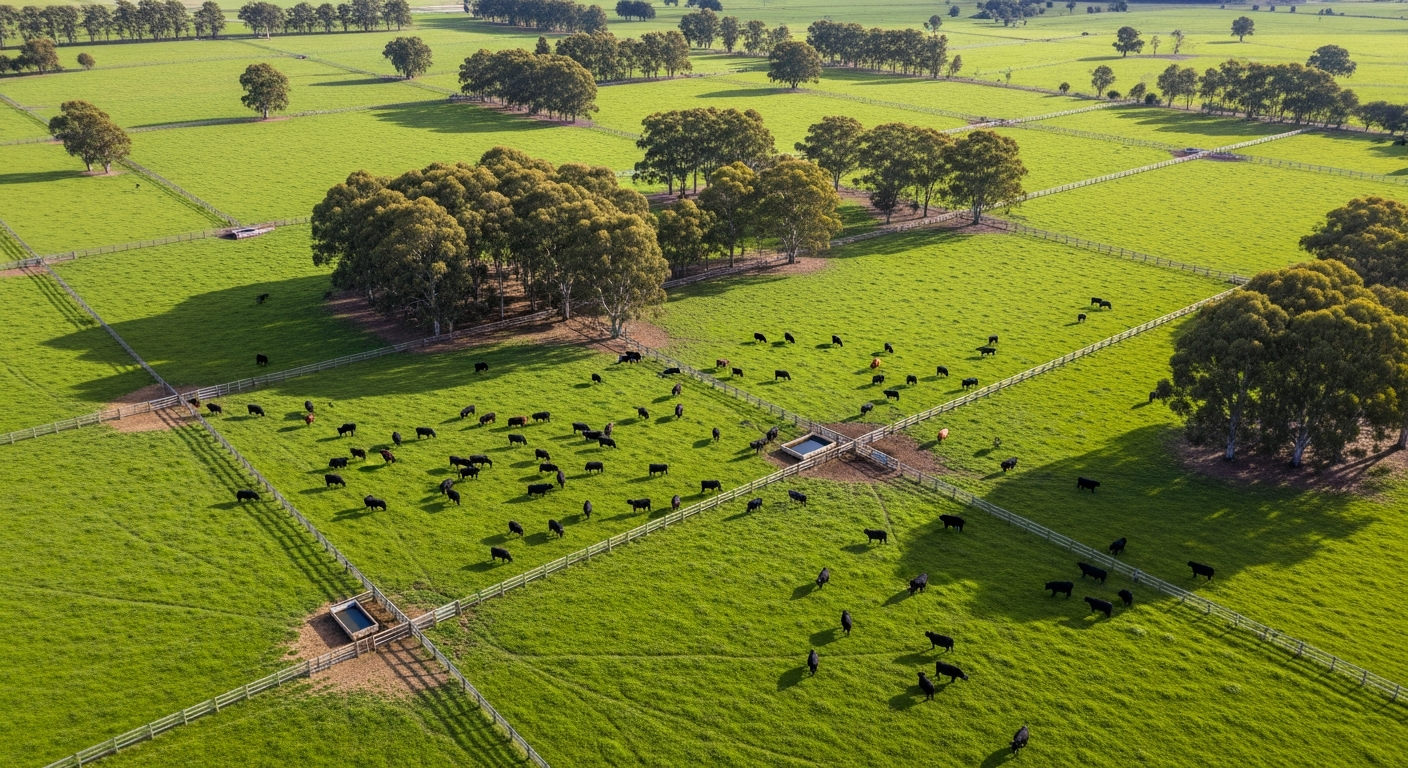
Both systems operate on the same land. The larger cows can produce strong calves — and in the right system with adequate feed, they perform well. But in most pasture-based operations, higher maintenance requirements mean fewer cows can be carried, which limits total output per hectare.
Moderate cows require less maintenance energy, allowing more cows to be run on the same country. The result, in most grazing systems, is more kilograms of beef per hectare.
Same land. Lower inputs. Higher total output.
Moderate Does Not Mean Small
Moderate cow size does not mean small or underpowered cattle.
Commercial beef systems still require animals capable of producing high-growth steers suitable for feedlot finishing and premium export markets. The goal is balanced genetics.
Cows that are large enough to raise powerful calves and produce competitive carcases — yet moderate enough in mature size to keep herd maintenance costs under control.
In practical terms the ideal system produces:
- ✓ Efficient, moderate-maintenance cows
- ✓ Heavy weaner calves
- ✓ High-growth steers suited to feedlot finishing
- ✓ Carcases that meet market specifications
This balance between growth and cow efficiency is where many of the most profitable commercial herds operate.
The Biology Behind Efficiency
The key driver is maintenance energy.
Every cow requires energy simply to stay alive before reproduction, lactation or growth are considered. Larger animals require more maintenance energy. Moderate-sized animals require less.
When feed resources are limited — which is the reality in most grazing systems — lower maintenance requirements allow producers to run more cows on the same country.
And when more productive cows are run on the same land, the total kilograms of beef produced increases.
This is why many of the most profitable commercial operations focus on efficiency rather than extreme size.
“The most profitable cow rarely wins the show ring. She does not necessarily top every genetic ranking either. But she quietly converts grass into beef year after year without demanding more from the system than it can provide.”
How BeefAI Measures This
BeefAI™ was built to answer exactly these questions. The platform does not just rank bulls by individual EBVs — it evaluates every sire through the lens of what his daughters will cost to maintain.
Cow Economics — Built Into Every Analysis
Cow Efficiency Ratio (CER)
Will his daughters wean at least half their body weight? A 500 kg cow weaning a 250 kg calf hits the benchmark. A 600 kg cow weaning 260 kg does not. Big cows are fine when they perform proportionally — CER tells you whether they do.
Stocking Rate Impact
Lighter cows mean more cows per hectare, more calves per hectare, and more total kilograms of beef from the same land. Every bull shows his predicted impact on herd stocking capacity.
Predicted Cow Size
Every bull shows what his daughters will likely weigh at maturity and what that will cost in feed. No guessing, no surprises.
Curve-Bender Detection
Identifies bulls that produce heavy weaners without blowing out mature cow size — the growth pattern commercial herds are built on.
This is why BeefAI™ was built as a herd optimisation platform rather than a bull ranking tool. The question is not “Which bull has the best EBVs?” The question is “Which bull makes the whole system more profitable?”
See What Your Bulls Will Cost You
Every bull in every catalogue analysis gets a full Cow Economics panel — CER, stocking rate impact, predicted cow size, and Curve-Bender score.
Sign Up Free at BeefAIWant the full picture? Read The AI Stockman — the feature article covering how BeefAI™ transforms Angus bull selection by encoding decades of breeding experience into genetic decision software.