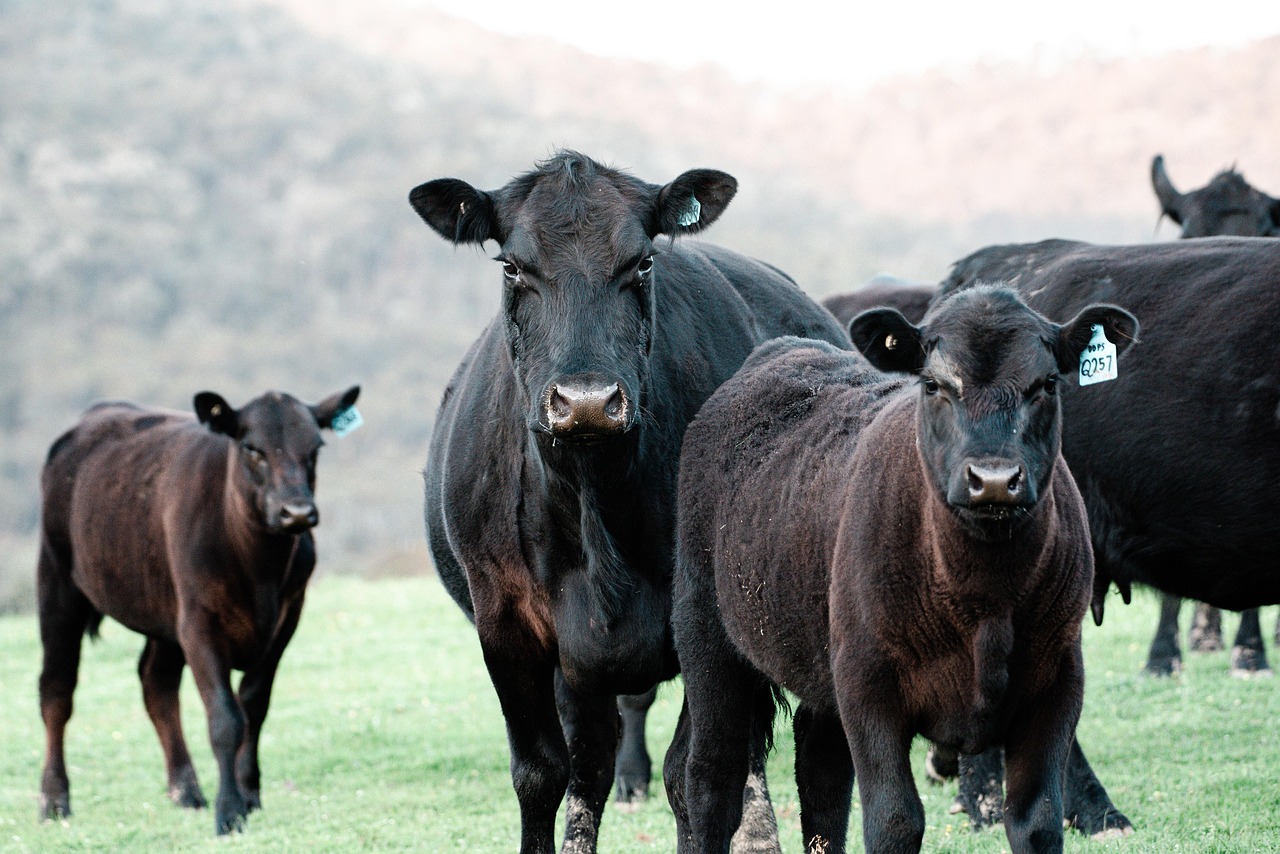

In an era of exploding genetic data and tightening margins, a new Australian platform is helping cattle producers turn complex numbers into smarter breeding decisions — without replacing the instincts of a good stockman.
 The Challenge of Modern Bull Selection
Step into any autumn Angus bull sale across southern New South Wales or northern Victoria and you'll see the same scene play out.
Rows of powerful black bulls stand in the yards. Producers lean over catalogues filled with EBVs, percentiles, and selection indexes. Phones and notebooks come out. Numbers are circled, compared, debated.
The data is there — more detailed than ever before. Birth Weight. 400-Day Growth. Intramuscular Fat. Mature Cow Weight. Dozens of genetic traits. Multiple selection indexes. Breed percentiles for every one of them.
But one question still drives the final decision: Which bull actually fits my country, my cows, and my bottom line?
For decades, answering that question relied on experience, intuition, and hours of manual comparison.
In early 2026, a new Australian platform called BeefAI™ began offering a different approach.
Turning EBVs Into Real Decisions
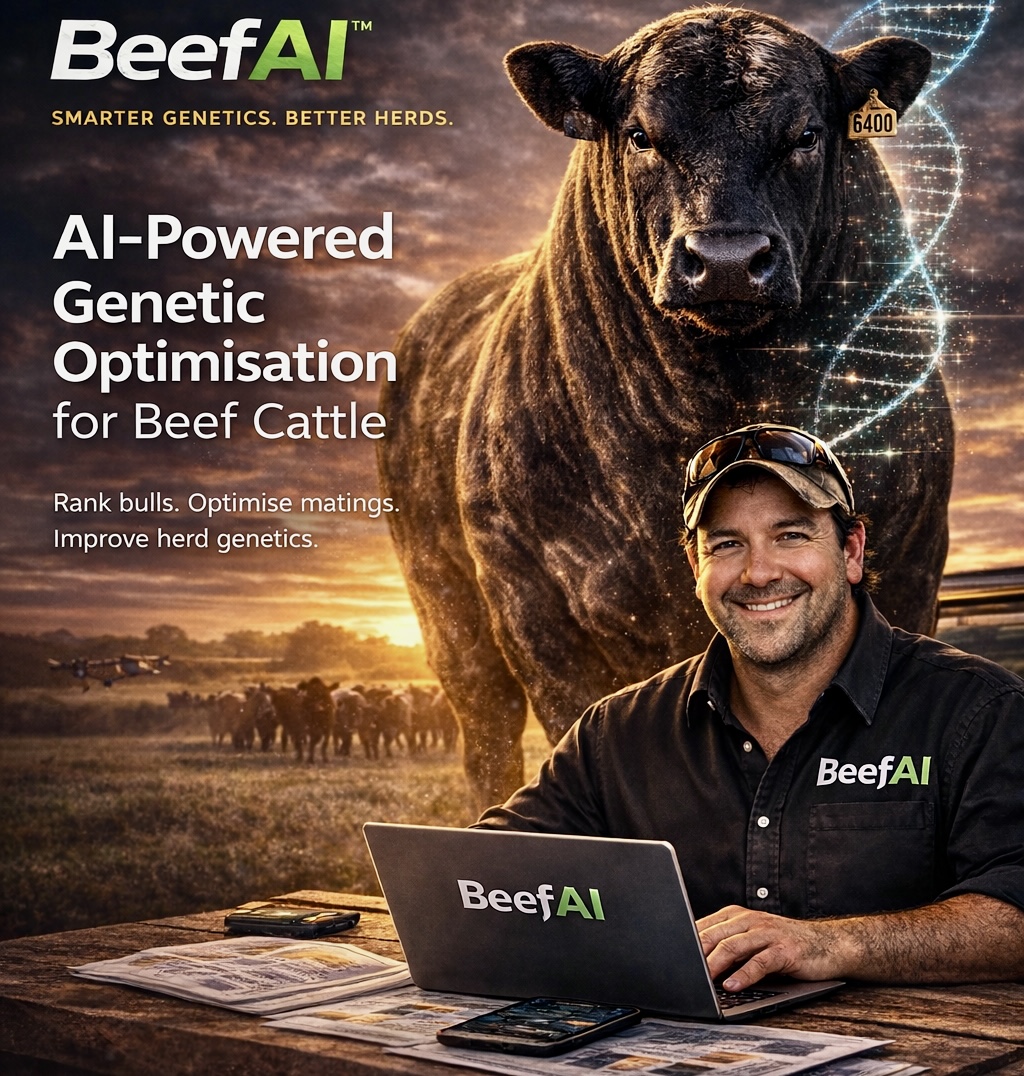
BeefAI™ is an Angus-focused genetic intelligence platform that translates official Angus Australia TACE data into practical breeding insights.
Instead of forcing producers to interpret complex EBV tables, the system converts genetic data into clear, production-focused analysis. The workflow takes about sixty seconds.
Upload a sale catalogue PDF. Select a breeding goal. Enter basic farm conditions — rainfall zone, feed base, management level. Within seconds the system produces a full assessment of every bull, complete with explanations of how each animal is likely to influence a commercial herd.
Four Biological Systems, One Analysis
What separates BeefAI™ from traditional EBV tools is that it does not simply compare numbers. It evaluates how genetics behave inside a real production system.
The platform models four biological systems simultaneously for every bull in the catalogue.
The BeefAI Genetic Optimisation Method™
1. Calving Biology
Birth weight, calving ease, and gestation length are analysed to predict dystocia risk, calf survival, and heifer suitability.
2. Cow Herd Biology
Mature cow weight, milk, fertility traits, and body condition indicators model long-term cow size, feed demand, stocking rate, and reproductive efficiency.
3. Growth Efficiency
200-day, 400-day, and 600-day growth traits are analysed alongside feed intake indicators to evaluate growth curves, feed conversion, and beef production per hectare.
4. Carcase Value
Intramuscular fat, eye muscle area, carcase weight, and fat depth are analysed to predict MSA grading potential, grid compliance, and premium market suitability.
This is not simply: Genetics → Score.
It is: Genetics → Biological System Modelling → Production System Optimisation.
“This is not a toy. You now have a platform that reads raw EBV data, interprets trait antagonisms, models production systems, and explains it in farmer language. Very few genetic tools do that.”
The Genetic Pattern Most Breeders Overlook
Across multiple catalogue analyses, BeefAI™ consistently identifies a genetic efficiency pattern that many traditional EBV tools fail to recognise.
The most profitable cattle are rarely those with the largest individual EBVs.
Instead, the most efficient systems often come from a balanced genetic profile combining:
- Low birth weight for calving safety
- Strong early growth for heavy weaners
- Moderate mature cow size for lower herd feed demand
This combination produces cattle that generate more kilograms of beef per hectare.
| Cow Type | Mature Weight | Stocking Rate | Weaning / Hectare |
|---|---|---|---|
| Large cow | 700 kg | 1 cow / ha | 300 kg / ha |
| Moderate cow | 565 kg | 1.15 cows / ha | 320 kg / ha |
At first glance the difference may appear small, but the biology behind it is significant.
Big cows can absolutely perform — and in high-input systems with abundant feed, they do. Every producer would love it if all their big cows produced big, sappy prime calves ready for the butcher shop. Many leading studs prove it’s possible. But in most herds, a lot of the time they don’t — cow size increases without a matching increase in calf weight. When a 650 kg cow is weaning the same as a 550 kg cow, the extra size is just extra cost. In pasture-based operations, that higher maintenance demand means fewer cows can be carried on the same land base, and overall output per hectare falls.
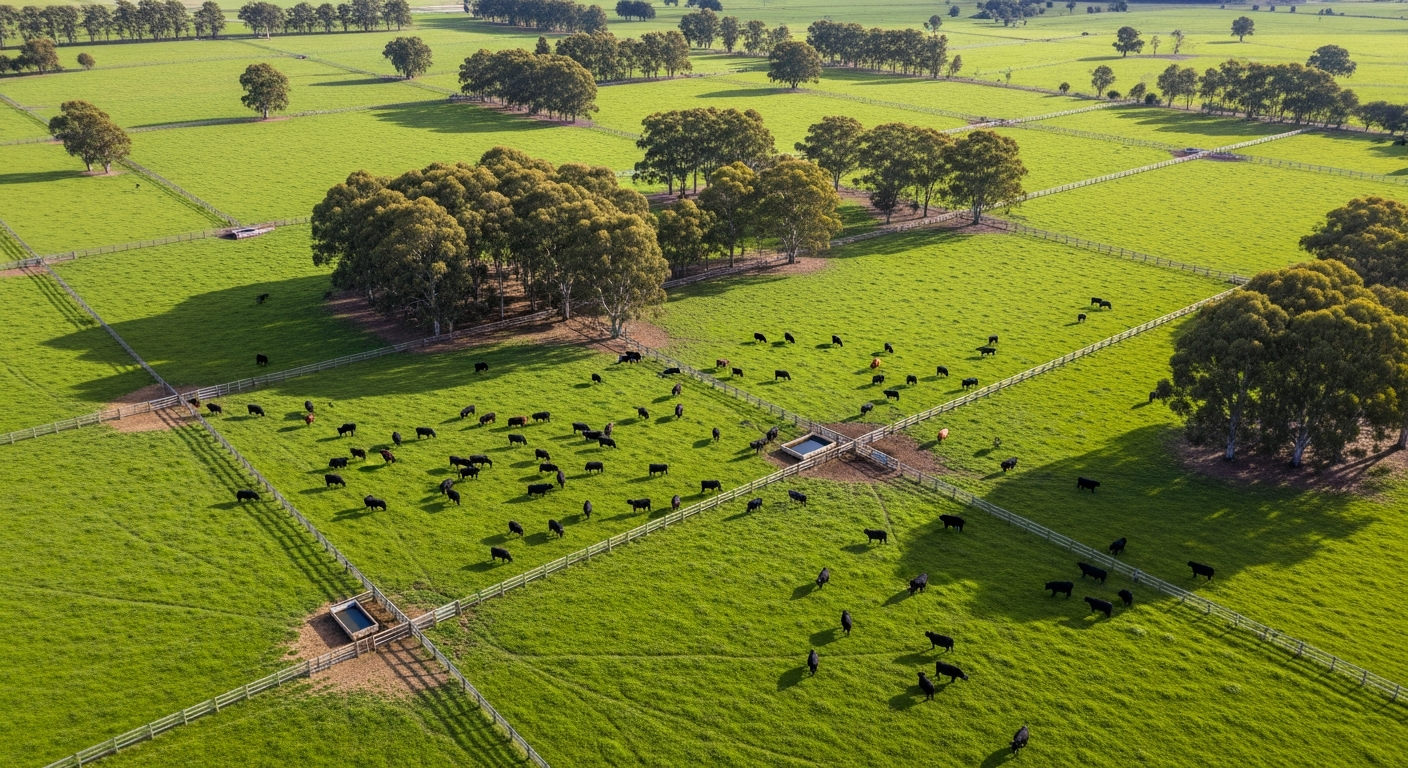
Moderate-sized cows change that equation in most grazing systems. With lower maintenance requirements, more cows can be carried on the same country. The result is a system that produces more total kilograms of beef from the same land base while requiring less feed input per animal.
Same land. Lower inputs. Higher total output.
Moderate cow size does not mean small or underpowered cattle. The goal is not to produce smaller framed animals that limit growth or carcase performance. Commercial beef systems still require cattle capable of producing high-performing feedlot steers suitable for premium export markets.
The objective is balanced genetics. Cows that are large enough to raise powerful, high-growth calves — yet moderate enough in mature size to control herd maintenance costs and maintain stocking rate.
In practical terms, the ideal system produces efficient, moderate-maintenance cows; heavy weaner calves; high-growth steers suitable for feedlot finishing; and carcases that meet export market specifications.
Commercial profitability is ultimately determined by how efficiently a herd converts land and feed into kilograms of beef. This balance between growth performance and cow efficiency is where many of the most profitable commercial herds operate.
BeefAI™ is designed to help producers identify bulls that move their herd toward that balance.
Traditional EBV tools reward extreme traits. BeefAI™ rewards efficient production systems.
Validated Against Official TACE Data
Any genetic decision tool is only as reliable as the data behind it.
BeefAI™ has been independently cross-checked against official Angus Australia TransTasman Angus Cattle Evaluation (TACE) reports.
Across multiple catalogue and single-animal analyses, the system reproduced every EBV value, every breed percentile, and every selection index with 100% accuracy against official source data.
This verification ensures the platform's analysis begins with the same genetic information used by the breed's official evaluation system.
Inside a BeefAI Report
After uploading a catalogue, users receive a comprehensive report covering every bull analysed. A typical 25–30 bull catalogue produces more than 100 pages of genetic intelligence.
What Every Bull Report Includes
APEX Score
Overall suitability rating out of 5.0 based on the selected breeding objective.
Farm Fit Rating
Evaluation of how well the bull's genetics match rainfall zone, pasture base, and management system.
Trait Cards
Every EBV displayed with percentile position, biological interpretation, and goodness scoring.
Antagonism Map
Thirteen trait conflicts identified and scored — including growth vs calving ease, marbling vs mature cow size, and milk vs fertility pressure.
Cow Efficiency Ratio (CER)
Prediction of how the bull's daughters may influence herd maintenance costs and stocking rate.
GENEius AI Summary
Plain-language interpretation explaining what the bull's genetics mean for the herd and production system.
How Buying Behaviour Changes
Traditional bull catalogues present EBVs, percentiles, indexes, pedigree information, and photographs. The responsibility for interpreting that data rests entirely with the buyer.
Most producers therefore rely on shortcuts: top-percentile growth, highest selection index, popular sire lines. But those shortcuts rarely answer the most important question: What will this bull actually do to my production system?
BeefAI™ reframes the decision. Instead of “Which bull has the best EBVs?” producers begin asking “Which bull makes my production system more profitable?”
That shift fundamentally changes how bulls are evaluated.
“BeefAI doesn't just show the genetics. It shows the consequence.”
Producers using the platform often arrive at sales with an assessed shortlist already prepared — knowing which bulls match their environment and which ones may create expensive cows long term.
Beyond Bull Selection
While catalogue analysis is the platform's most visible feature, BeefAI™ extends into complete breeding program management.
ACE Mating Engine
Using the Hungarian optimisation algorithm, the ACE engine pairs sires with cows across an entire herd to maximise genetic complementarity while managing semen inventory and breeding goals. AI Day mating plans allow producers to move directly from genetic planning to paddock implementation.
Virtual Calf Predictions
Before committing to a mating, producers can model expected progeny genetics — including EBVs, percentiles, and production implications.
Herd Database
The platform also tracks purchased bulls, breeding cows, prospects, and watchlist animals — allowing producers to monitor their genetic investment over time.
Built by a Cattleman, Not a Coder
Unlike many agricultural software platforms, BeefAI™ was built by a producer who has bred, fed, and shown Angus cattle — and watched many of those own-bred animals go on to win carcass competitions while producing fertile, productive females that lasted in the herd.
Seeing the same animals perform in the carcass data that had already built good breeding females reinforced a lesson that has shaped every genetic decision since: fertility and data sit at the centre of good genetics, not just how an animal presents in the paddock. The platform is an expression of that lesson. The goal is not to replace visual appraisal or structural assessment. It is to put the data alongside it — so neither is flying blind.
“Stockmanship still matters. BeefAI simply helps make sense of the data.”
The platform encodes how experienced cattlemen think about genetics: Which bulls create efficient cow herds? Where are the hidden trade-offs between traits? What genetic decisions today affect profitability three generations from now?
Because of that perspective, the outputs aim to reflect real biological consequences — not just statistical rankings.
The Bottom Line
Cattle breeding has never had more genetic information available. But more data does not automatically lead to better decisions.
BeefAI™ aims to close that gap by turning complex genetic data into practical insights producers can apply in real production systems. The goal is simple:
Better cows. Better decisions. Better herds.
Because the most important question in cattle breeding is not “Which bull has the biggest numbers?”
It is “Which bull makes the system more profitable?”
Stop Guessing. Start Selecting.
Every sale day, the best genetics walk through the ring. BeefAI™ helps ensure producers know which ones match their program before the auctioneer starts.
Sign Up Free at BeefAIQuick Start Guide
1. Create a free account
Sign up at beefai.tech — free during beta, no credit card required.
2. Upload a catalogue
Drop in any Angus sale PDF, paste EBV text, or import a spreadsheet.
3. Set your farm profile
Select breeding goal, rainfall zone, feed base, and management level.
4. Get your assessment
Every bull assessed, classified, and explained — ready for sale day.
Read The Genetic Edge series — four newsletters exploring why getting genetics right is the single highest-leverage decision in a regenerative Angus operation.
Issue 1: Cow Efficiency • Issue 2: System Fit • Issue 3: Grass Production • Issue 4: Hidden Constraints