In Issue 1, we started with cow efficiency. In Issue 2, we showed why high-EBV genetics often miss in regenerative systems. In Issue 3, we identified the grass production ceiling. Now we go deeper — into the five hidden biological constraints that quietly cap pasture potential, even when everything above ground looks right.
You’ve fixed a lot. Soil tests are in hand. Biology is being supported. Angus genetics match your country and model. Grazing is structured, rest is extended, resets are timed. Yet the grass engine still doesn’t fire the way it could.
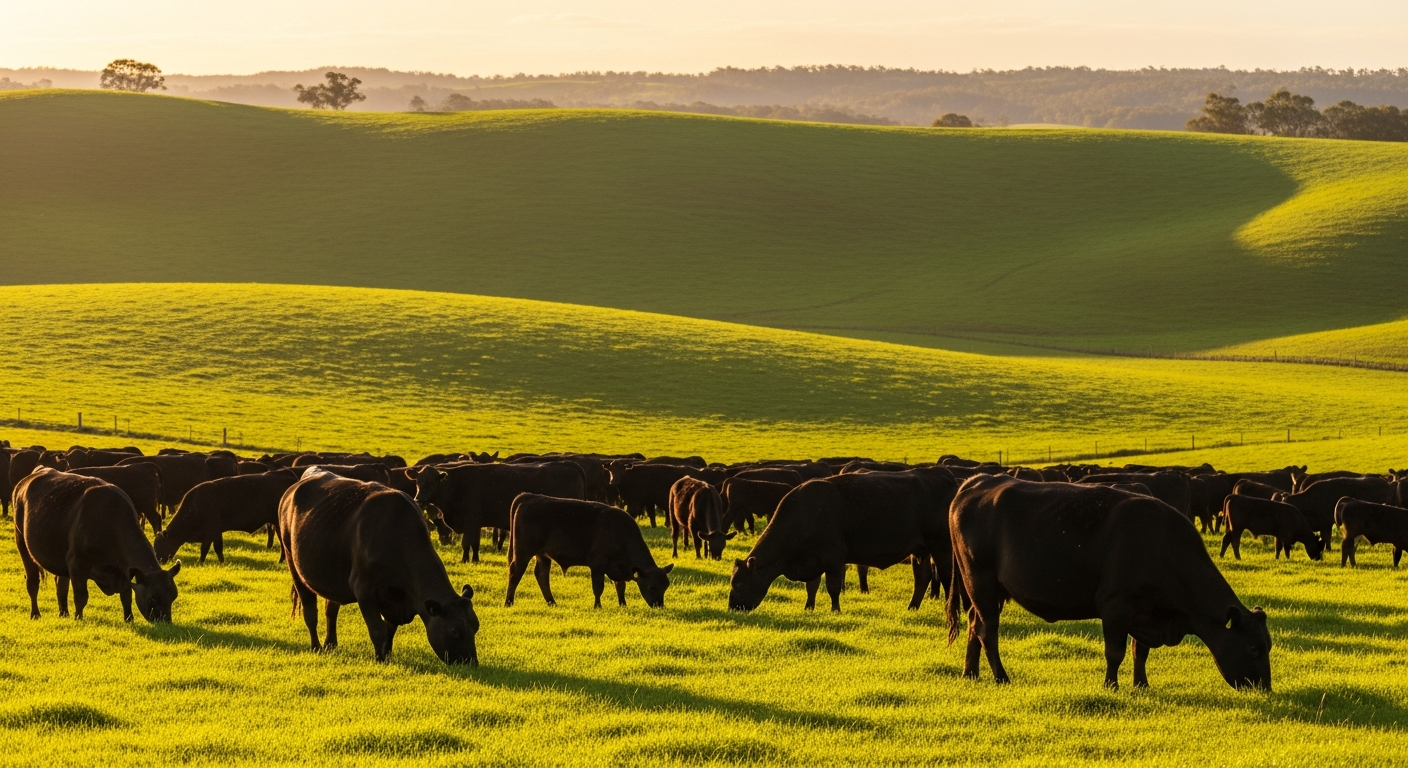
Pasture looks “okay” — green, grazed evenly, recovering. But biomass per hectare stays flat year after year. Seasonal peaks are modest. Carrying capacity creeps up slowly, if at all. kg/ha feels like it’s stuck at a level below what the land should deliver.
The common assumption is: “We just need more time. Better seasons. One more tweak to grazing.”
The reality is different.
“Most pastures never reach their potential because of five hidden biological constraints that quietly cap production — even when everything above ground looks managed correctly.”
These constraints limit how much liquid carbon gets pumped below ground, how effectively microbes cycle nutrients, how deep roots grow, and how resilient the feed base becomes.
Until they are identified and addressed — in the right order — the grass production ceiling remains in place, no matter how well you graze or how well the cattle fit.
The BeefAI 5 Hidden Biological Constraints
Across regenerative Angus systems, BeefAI™ consistently finds that pasture performance is limited by these five core biological constraints:
What This Looks Like on the Ground
A producer might say: “We’re doing everything right — grazing is good, no overstocking, rest is long, supplements are minimal.”
Yet the paddock never “takes off.” It recovers to a certain point and plateaus. Biomass stays consistent but never increases significantly. The system is stable — but not expanding.
“That’s the hallmark of hidden constraints: everything functions, but nothing amplifies.”
The Hard Reality
These five constraints are invisible to most metrics:
- Visual inspection shows green grass
- Grazing records show good utilisation
- Cattle look fine
- But the biological engine is running at partial throttle
Every year you leave these unaddressed is another year of lost potential kg/ha.
The Genetic Link
As we established in Issue 2, genetics sit at the end of the biological chain — but they influence every link in it. The five constraints above make that relationship concrete: a soil that can’t cycle nutrients caps grass production; capped grass production tightens carrying capacity; reduced carrying capacity punishes cattle whose maintenance demands are too high. Mismatched genetics don’t just underperform — they make every biological constraint above them harder to fix.
Why BeefAI™ Exists
The challenge isn’t knowing these constraints exist — it’s understanding how they interact with the genetics you’re choosing.
This is exactly why BeefAI™ was built.
Because most producers hit these ceilings and respond by chasing better bulls, stricter rotations, or more inputs. But here’s the key insight: genetics that don’t match the system make every biological constraint worse. Big cows absolutely have a place — in high-input systems with the feed base to support them, they perform. But choose cattle whose maintenance demands exceed your carrying capacity, whose frame doesn’t match your feed base, or whose requirements outstrip your environment — and every one of these five constraints tightens. The grass engine can’t keep up. And that mismatch compounds with every mating cycle, embedding deeper into your herd for a decade or more.
No grazing plan fixes that. No rotation, no rest period, no supplement program can undo a genetic direction that doesn’t fit the biological reality of your land.
BeefAI™ maps these five constraints directly onto the genetic decision. When you upload a bull’s TACE document, the CER engine flags when his genetic demand profile exceeds the feed base. The Environment Fit engine checks whether his mature size and maintenance requirement match the carrying capacity of your country. The verdict tells you whether this bull amplifies the system you’ve built — or quietly fights it.
These five constraints are the biological framework BeefAI™ operates within:
Instead of asking “What’s wrong with my grazing?” or “Do I need new genetics?”
The deeper question is: “Which of these five hidden constraints is capping my grass production — and are my genetics and management aligned to the biological reality of this land?”
The Shift That Matters
The next phase in regenerative Angus production won’t come from more tools or trends.
It will come from understanding these five biological constraints — and choosing genetics that work with them, not against them.
Identify the limiters. Feed and balance the soil biology properly. And critically — make sure every genetic decision supports the biological system you’re building, because a bull that doesn’t fit your system today becomes a cow herd that doesn’t fit for the next decade.
Final Thought
The most profitable regenerative producers aren’t the ones with the flashiest bulls or the tightest grazing plans.
They’re the ones who understand why their pastures plateau — and make genetic decisions that work with the biological reality of their land, not against it.
They know that true production comes from a grass engine running unrestricted: deep roots, vibrant fungi, balanced minerals, diverse exudates, and robust microbial cycling. And they know that mismatched genetics — cattle whose maintenance demands outstrip the feed base, regardless of their size — will cap that engine no matter how well you graze.
Because in the end: you don’t unlock more kg/ha by working harder on the surface.
You unlock it by removing the biological ceilings underneath — and choosing genetics that let the system compound upward instead of pulling it down.
The five constraints are the ceiling. The genetics determine whether you hit it — or compound above it.
Get the Genetics Right
Every analysis accounts for the biological reality of your system — because mismatched genetics compound, and no grazing plan can undo them.
Sign Up Free at BeefAIWant the full picture? Read The AI Stockman — the feature article covering how BeefAI™ transforms Angus bull selection by encoding decades of breeding experience into genetic decision software.
Read the full series from the start
Issue 1: When the Signals Don’t Match • Issue 2: Where the Profit Gets Left Behind • Issue 3: The Grass Production Ceiling • Issue 5: Removing the Constraints