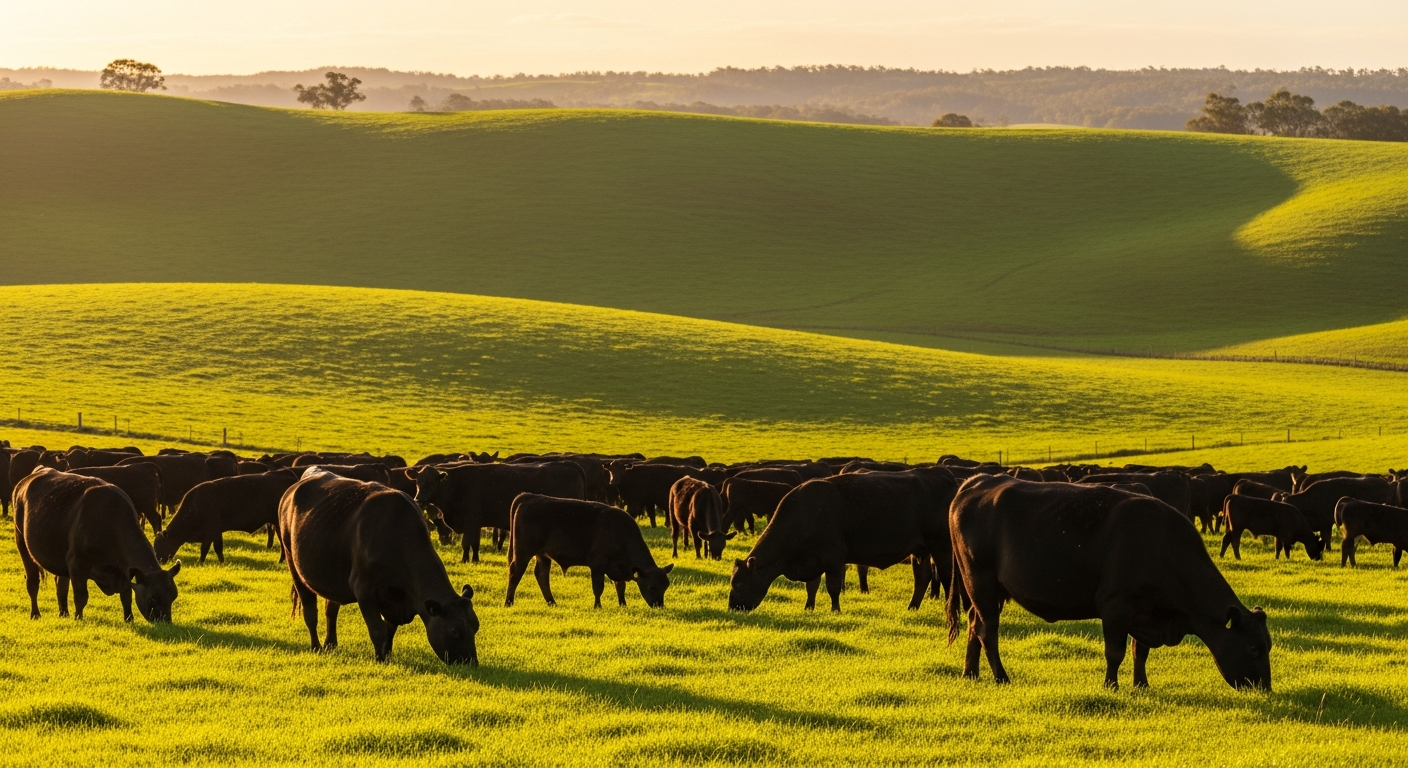
In Issue 1, we started with cow efficiency. In Issue 2, why high-EBV genetics often miss. In Issue 3, the grass production ceiling. In Issue 4, the five hidden biological constraints. In Issue 5, how to remove them. Now we go one level deeper — into whether all that improved production is actually building stable carbon, or just cycling it.
For years, regenerative grazing has promised “more carbon in the soil.” The biology is clear: when plants are functioning well — strong photosynthesis, balanced minerals, and high sugar production — they pump carbon-rich exudates into the roots, feeding microbes and building stable soil carbon. But when plants are stressed or the system is out of balance, carbon leaks out as respiration instead of being stored.
Most of us nod along… then keep grazing the same way and wonder why soil tests don’t move — or why the promised “build” never shows up in the numbers.
The Uncomfortable Truth
Here’s what no one wants to hear: grazing execution can break the very mechanism that should be building carbon.
Even with healthy plant growth, poor residuals, patchy grazing, or insufficient dung return turns “carbon cycling” into “carbon loss.” The carbon goes through the system but never sticks.
That’s why some high-production regen operations see no net gain — or even losses — despite doing “everything right.”
The Carbon Illusion Most Systems Miss
“High production does not guarantee carbon gain. In many cases, more growth just means more biology burning more carbon — if grazing isn’t locked down.”
In many cases, the chain looks like this:
- → More growth → more microbial activity
- → More activity → higher respiration
- → More respiration → carbon loss
If grazing isn’t controlled, you actually accelerate the leak.
More biology without control doesn’t build carbon — it burns it.
Where Carbon Actually Comes From
Carbon doesn’t come from grazing. It comes from photosynthesis, sugar production, and root exudates.
Grazing only determines whether that carbon is:
Stabilised into the soil — locked in by microbial pathways and fungal networks
Lost back to the atmosphere — respired out before it can be stored
Why Dung Distribution Is Non-Negotiable
Dung is not a by-product. It is the primary carbon and nutrient return mechanism.
The Dung Equation
- ✓ Patchy dung → patchy biology → uneven carbon pathways
- ✓ Even dung → uniform microbial activity → stable carbon build
If dung isn’t evenly returned, the carbon cycle breaks — no matter how good the pasture looks.
The Missing Piece — Carbon Integrity
Most systems measure plant growth or soil organic carbon. But neither tells you whether the system is actually working.
The real question is:
“Is this paddock actually building stable carbon, or just cycling it?”
The answer sits at the intersection of two things that are almost always measured separately:
Carbon Integrity isn’t additive — it’s multiplicative. If either factor drops toward zero, the whole outcome collapses to cycling (or loss).
Leaf-to-stem ratio, pasture density, biology return adequacy
Residual protection, dung distribution, grazing evenness, rest adequacy
When both are high, stable carbon builds. When one is low, you’re cycling carbon, not accumulating it.
What This Looks Like on Real Country
The change on our own country started the way most changes do — not by intention but by paying attention. Before we adjusted the graze timing and residual management, recovery was uneven. Parts of the paddock came back quickly after the mob moved through. Other sections sat dormant well into the rest period. Dung concentrated in the preferred grazing areas. The biology underneath was being fed in patches, which meant it responded in patches. The paddock looked managed. But it wasn’t completing the cycle.
The adjustment was simple in principle: heavier residuals, shorter grazes, extended rest, and deliberate pressure distribution to even out the dung return across the whole paddock. In practice it was harder to hold the line — the first graze back felt like leaving too much. The paddock looked worse before it looked better. By the second and third rotation, the evidence was in the regrowth. Consistent recovery across the full ground surface rather than from scattered green pockets. The sections that had previously sat quiet were now responding with the rest. The biological signal was uniform for the first time.
What we adjusted wasn’t the grazing system. It was how we were feeding the biology within it. The result isn’t how the paddock looks on entry — it’s what happens after you leave. No bare zones where dung was absent. No dead recovery areas. No overgrazed patches fighting to come back. Just a uniform biological response across the whole paddock. Once you can read that signal, you don’t look at a paddock recovery the same way again.
“That’s the difference between grazing that looks controlled — and grazing that actually completes the cycle.”
What This Changes in the Next Graze
Graze based on feed availability.
Graze based on carbon integrity outcome — asking: “Will this move protect residuals, distribute dung evenly, and let the plant finish its sugar/exudate job?”
Practical changes producers are already making:
- → Delay graze — protect plant function and sugar production
- → Increase density — improve dung distribution
- → Shorten graze — protect residuals and reduce respiration losses
- → Extend rest — allow full recovery and exudate flow
Why This Matters More Than Another Carbon Score
Most systems measure growth. The real question is whether the system actually worked.
Plant function and grazing execution have always been treated separately. When you measure both together, you close the loop — and you can see, paddock by paddock, whether you’re building or burning.
Final Thought
The most important thing happening in your paddock isn’t what you can see above ground.
It’s whether the carbon your plants produce is being locked in — or leaked back out. Whether the system you’ve built actually completes the cycle, or just looks like it does.
Because what matters isn’t how you graze — it’s what the paddock does next.
That’s the difference between cycling and building. And once you see it, you can’t unsee it.
Same Land. Different Outcome.
This is the sixth in our series on the biology behind profitable beef production. Every issue digs into one piece of the system most producers are never shown — the biology that connects genetics, grazing, and land performance.
Read the Full Series →