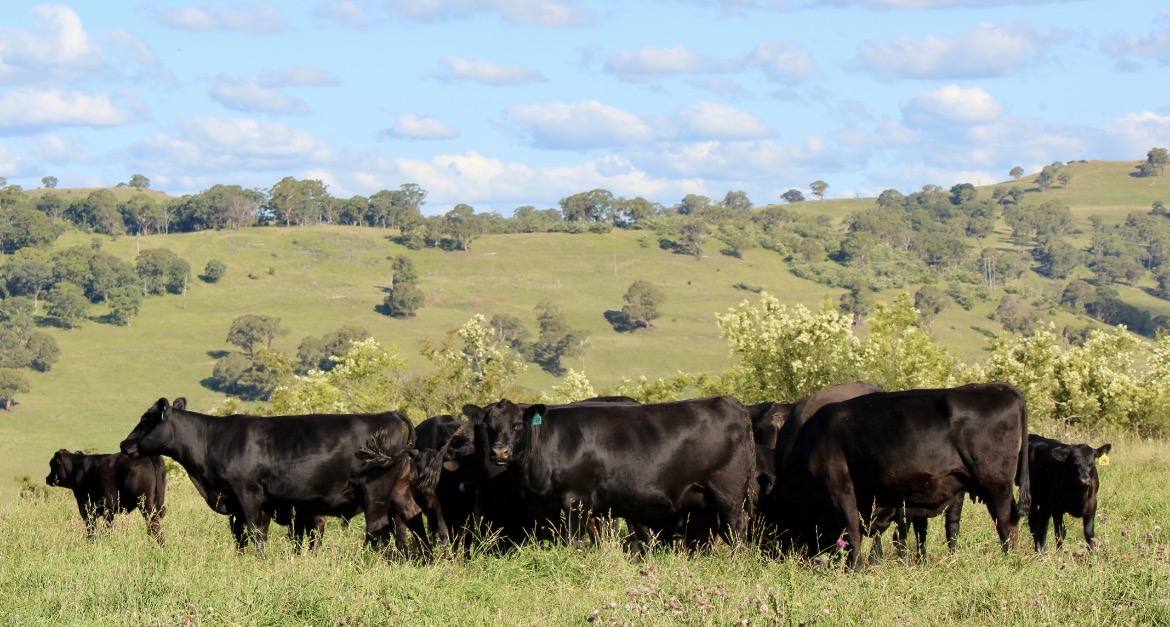
A heifer costs between $2,000 and $3,000 to get to her first calf. Two years of feed. Two years of land. Two years of management before she produces a single kilogram of saleable beef or a single replacement female. She doesn’t cover that cost until her third calf. Everything after that is return on investment.
A cow that stays to her seventh calf has paid back her development cost three times over and generated four years of pure compound return. A cow culled at her fourth calf — for lameness, poor udder, failure to cycle, or temperament — never got there. She covered her costs and left. The heifer that replaced her started the clock again.
The bull you joined her dam to three years ago determined which of those two outcomes was more likely. Most producers never knew which trait to check.
What Stayability Actually Measures
Stayability is the BREEDPLAN EBV that predicts whether a bull’s daughters will stay productive in the herd across their full working life — measured as the probability of a daughter still in the herd and producing at age six, relative to breed average. Higher is better.
It’s not a single-trait EBV the way birth weight or weaning weight is. It’s a composite prediction built from six traits that together determine whether a cow stays or leaves your herd. Each of those six traits has its own TACE EBV or visual score. None of them is called “stayability” on the catalogue page. That’s part of why nobody weights it.
The six traits that drive stayability
Calving Ease Daughters • Days to Calving • Mature Cow Weight • Mature Body Condition • Structural Soundness (Claw Set, Foot Angle) • Docility
Two of these are primary signals. Four are secondary. Together they determine whether a bull’s daughters are still productive in your herd at year six — or a replacement statistic.
The Six Traits Explained
Calving Ease Daughters (CE Dtrs)
A daughter who calves hard as a first-calf heifer starts her productive life in deficit. She recovers slowly, conceives late, and she’s more likely to be an involuntary cull by her fourth year. The connection between difficult first calvings and early departure from the herd is well established in the BREEDPLAN dataset. Issue 7 covered why CE Dtrs is the most underweighted EBV on the TACE document. Stayability is part of the reason.
Days to Calving (DC)
As covered in Issue 9 — daughters that cycle late drift progressively later each season. By their fifth year they’re outside the practical joining window on most Australian operations. Involuntary cull. Predicted by the DC EBV of their sire three years earlier. The stayability model weights DC heavily because the BREEDPLAN data shows it’s one of the two strongest predictors of whether a cow’s still productive at year six.
Mature Cow Weight (MCW)
Heavier cows have higher maintenance requirements. In nutritionally limited systems — which describes most Australian beef country for at least part of every year — they’re the first to lose condition in a dry autumn, the last to cycle in a late spring, and the most likely to be culled in a run of poor seasons. A bull stacking MCW EBV is increasing maintenance demand faster than many systems can comfortably support — and replacement pressure rises as a consequence. The effect compounds across seasons and it’s rarely attributed to the correct cause at point of culling.
Mature Body Condition (MBC)
The genetic ability to hold condition under pastoral pressure. A cow that maintains condition through a dry autumn is a cow that cycles on time next joining and calves again next year. A cow that can’t hold condition regardless of available feed is a candidate for involuntary culling by her fifth season. MBC is rarely discussed at Australian bull sales. Its contribution to stayability is significant — particularly in low-rainfall and northern pastoral systems where nutritional variability isn’t the exception. It’s the norm.
Structural Soundness — Claw Set and Foot Angle
Lameness is one of the leading causes of premature culling in Australian beef herds. It’s highly heritable and often predictable from structural EBV data and careful visual inspection at sale day. A bull with poor foot angle or claw set EBVs produces daughters whose hoof structure will fail under Australian paddock conditions — muddy creek crossings, rocky ridges, long walks to water in dry times. That structural failure typically appears between years four and six. It gets attributed to the paddock, the season, or bad luck. The EBVs and visual scores at the bull sale predicted it years earlier.
Docility (DOC)
Difficult cattle are handled more, stressed more, and culled earlier. That’s not a management observation — it’s a genetic one. High docility EBV daughters are easier to yard, draft, and process; less likely to be injured in a race or gateway; and more likely to be retained when the culling decision is marginal. Low docility daughters get culled when conditions are hard and the operator doesn’t have the time or facilities to manage them carefully. The genetic signal was available at the bull sale. Docility is a BREEDPLAN EBV. It was on the TACE document.
The Stayability Grade on Every Verdict
When you upload a bull’s TACE document to BeefAI™, the platform evaluates all six stayability traits and assigns a grade — A through D — on the verdict card. Not a raw EBV number. A verdict, in plain language, with the specific traits driving the assessment identified and explained.
A bull with outstanding growth EBVs and a D stayability grade is producing daughters who’ll leave your herd before they generate compound return. The growth EBVs are real. So is the departure. The grade makes both visible in the same card.
The Science Behind the Prediction
The BeefAI™ stayability model isn’t a proprietary estimate. It’s peer-reviewed methodology DOI-published on Zenodo, calibrated against the Aliloo et al. 2025 dataset — 1.4 million Australian Angus records across multiple cohorts and environments, covering high-rainfall coastal country, low-rainfall inland systems, northern pastoral, and southern intensive operations.
That scale of validation matters. Stayability is a low-heritability composite trait. Predicting it reliably requires large datasets that span the full range of Australian production environments. The Aliloo dataset provides that coverage. CE Dtrs and DC carry the highest weights because the Australian data shows they are the strongest predictors of whether a cow is still in the herd and productive at age six. MCW and structural traits carry significant secondary weighting because their effect compounds across seasons in the variable-rainfall conditions that characterise most of Australia’s Angus country.
The Replacement Cost Nobody Calculates
The cost of an involuntary cull is never booked as a single line item. It arrives as a series of smaller costs across several years and it’s almost never attributed correctly to its genetic origin. Here’s what it actually looks like on a 300-cow self-replacing herd running 20% annual replacement:
The replacement merry-go-round — 300-cow herd, 20% replacement
The cycle: A producer runs 20% replacement, attributes it to the season, and buys 60 heifers a year to stay square. Each one takes 18–24 months to produce her first calf. The opportunity cost of that unproductive period isn’t calculated. The genetic cause isn’t identified. The next bull bought carries the same stayability risk. The cycle repeats.
Stayability isn’t a cure for a hard season. But a significant portion of what gets blamed on the season is actually genetic — and therefore preventable at the point of bull selection.
The Compound Return Calculation
The other side of the ledger is equally striking. A cow that stays to her seventh calf in a 300-cow herd produces the following over her working life:
The difference between a herd that averages 5.5 productive calvings per cow and one that averages 3.8 isn’t a marginal production difference. On 300 cows it’s the difference between 1,650 lifetime calves and 1,140 lifetime calves from the same number of joinings. That gap — 510 calves — is almost entirely genetic in origin. At $800–$1,200 per calf weaned, the enterprise value of that gap is $408,000–$612,000 across the productive life of one bull’s daughters. It was set at the bull-buying decision.
The bull you choose this season is setting the biological trajectory of daughters who’ll be in your herd in 2029 — and still there, or not, in 2033.
Closing the Trilogy
Issue 7 covered whether the calf arrives safely — CE Dtrs, CE Direct, Birth Weight. Does the first event in the chain go well for the cow and her offspring. Issue 9 covered whether she comes back — DC, SC, GL. Does she cycle on time, conceive in the first joining, calve early next season. This issue covers whether she stays — CE Dtrs, DC, MCW, MBC, structural soundness, docility. Does she remain productive long enough to generate the compound return that justifies her development cost.
These aren’t three separate decisions. They’re one chain. Every link either tightens or loosens the next. A cow that calves easily rebounds faster. A cow that rebounds faster conceives in the first cycle. A cow that conceives in the first cycle calves early next year. A cow that calves early, year after year, is the one still in your herd at year nine producing her seventh calf. She was not an accident. She was a genetic prediction that came true.
What BeefAI™ does with stayability
When you upload a bull’s TACE document, BeefAI™ evaluates all six stayability traits and generates a plain-language verdict alongside the A–D grade. CE Dtrs and DC carry the primary weight. MCW, MBC, structural soundness, and docility carry secondary weight that increases in extensive and low-rainfall operation contexts.
A bull with strong CE Dtrs, below-average DC, and above-average MCW in a dryland system gets an explicit antagonism warning in the stayability section. A bull with a D grade and outstanding $M index isn’t reported as a maternal recommendation. The stayability signal overrides the index marketing when the data supports it.
The full methodology is peer-reviewed and DOI-published at beefai.tech/publications. Calibrated against 1.4 million Australian Angus records — Aliloo et al. 2025.
The Practical Takeaway
Three things to act on from this issue:
1. Calculate your actual replacement rate. Not the target — the actual. If you’re replacing more than 20% of your cow herd annually on a self-replacing operation, a significant portion of that is likely involuntary. The genetics of your last three bull purchases are the place to start investigating why. The TACE documents are on file. The stayability signals were there.
2. Check the stayability grade on every bull you consider for a maternal program. A bull with outstanding growth EBVs and a D stayability grade may still add kilos — but his daughters may leave before they ever repay their development cost. Both need to be in the assessment before you bid.
3. Read the six traits that drive the grade. CE Dtrs and DC are the primary signals. If either is below breed average on a bull you’re considering for a self-replacing enterprise, you’re buying a heifer replacement problem that won’t show up for three years and will be attributed to everything except the correct cause.
The cow that earns compound interest calves easily, rebounds fast, holds condition through a dry autumn, stays sound on her feet, and is still in your herd at age nine producing her seventh calf. She was not an accident. She was a genetic prediction that came true. BeefAI™ reads the six traits that predict her — on every TACE document, every verdict, and every stayability grade.
Complete the Trilogy
This is the tenth in our series on the biology behind profitable Australian beef production. Upload a bull’s TACE document and BeefAI™ evaluates the full calving–fertility–longevity cluster for you — instantly, with a written verdict in plain language.
Get Started →Read the full series from the start
Issue 1: When the Signals Don’t Match • Issue 2: Where the Profit Gets Left Behind • Issue 3: The Grass Production Ceiling • Issue 4: Hidden Biological Constraints • Issue 5: Removing the Constraints • Issue 6: Carbon Cycling vs Carbon Building • Issue 7: The Bull Behind the Heifer • Issue 8: The Same Engine. A New Country. • Issue 9: The Herd That Pays for Itself