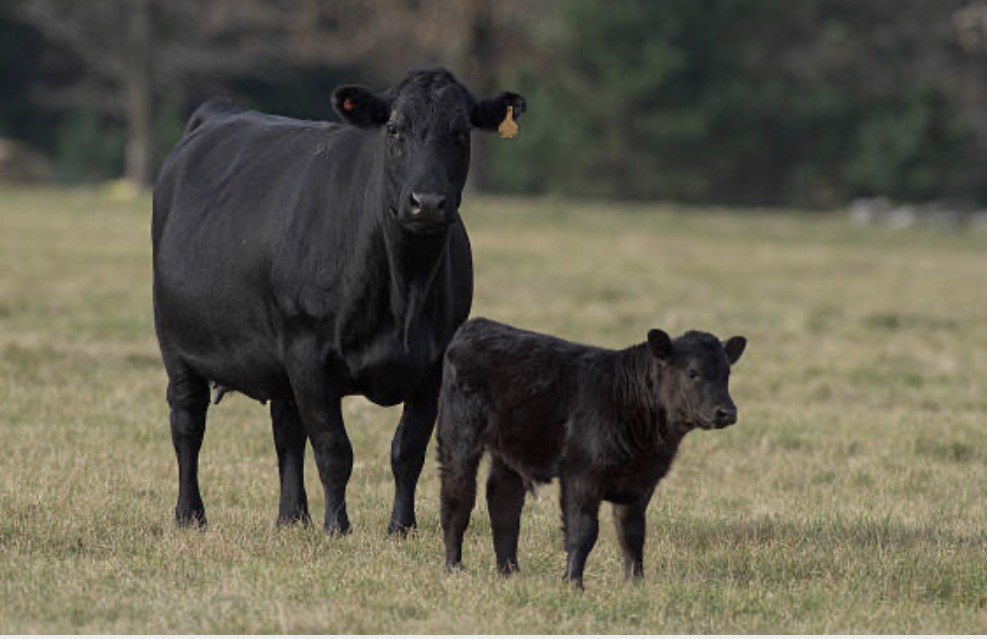
A single percentage point improvement in six-week in-calf rate in a 300-cow herd is worth approximately three extra calves per year. At current market prices, that’s $2,400–$4,500 recurring annually — no extra land, no extra labour, no extra feed cost. The bull that delivers it was selected three years ago. Most producers never knew which trait to look for.
It’s called Days to Calving. It’s listed on almost every TACE document. It’s almost never explained, almost never weighted explicitly by buyers, and almost never the subject of a structured selection priority. That is a systematic and very expensive oversight.
This issue is the second in the calving–fertility–longevity trilogy. Issue 7 covered the calving event: CE Dtrs, CE Direct, and why birth weight is the wrong trait to lead with. This issue picks up immediately after the calf hits the ground — whether the cow returns to oestrus, conceives on time, and calves again next year. The difference between a herd that tightens its pattern and one that slowly drifts later comes down almost entirely to this one EBV and how much attention is paid to it at point of bull selection.
The 365-Day System
The self-replacing beef cow operates on a 365-day reproductive cycle. Calve. Recover. Return to oestrus. Conceive. Carry to term. Calve again. For that to happen inside one calendar year, every stage of the cycle must proceed without delay. A cow that slips even once starts a compounding drift that gets harder to reverse each year.
The annual reproductive cycle — target timing
A cow that starts 25 days late, then drifts a further 7 days each year because of poor genetic fertility, will be 39 days late by her third calving. At that point she is beyond the practical joining window. She becomes an involuntary cull. The genetic Days to Calving EBV of her sire predicted that outcome. It was not visible at the time of bull selection.
“The bull you choose this year is setting the fertility ceiling of your cow herd in 2029. Days to Calving is the EBV that determines where that ceiling sits.”
What Days to Calving Actually Measures
Days to Calving (DC) is the TACE EBV that estimates the genetic difference in the average number of days from the start of the joining period to calving in a bull’s daughters, relative to the breed average. A bull with DC of −4 days is expected to produce daughters that calve, on average, four days earlier in the calving pattern than daughters of a breed-average bull.
DC is a daughter trait — not a bull trait
DC measures how his daughters perform as breeding cows, not anything about the bull himself. A bull with an excellent DC EBV is producing daughters that cycle early, conceive early, and calve in the front of the pattern year after year. This effect compounds across the productive lifetime of those daughters — and because DC is recorded from calving data, it captures return to oestrus, oestrus expression, fertilisation success, and embryo survival in a single number.
It is the most integrated measure of female reproductive efficiency in the entire TACE dataset. It just doesn’t get marketed that way.
DC has low heritability — typically 0.04 to 0.08. That reflects the large environmental influence on female reproductive performance. It does not mean DC should be ignored. It means that when high-accuracy DC EBVs are available on proven sires, they represent particularly valuable and hard-won information — the product of large data sets collected over many seasons. That information is available. It is underused.
The Three Fertility EBVs That Work Together
DC does not operate in isolation. Three EBVs form the fertility cluster in the TACE dataset, and understanding how they interact changes how you read a bull’s catalogue page.
Lower is better
Daughter trait
Higher is better
Son & daughter trait
Lower generally better
Direct & daughter effect
Scrotal Circumference (SC) is the EBV that most producers don’t connect to their cow herd’s fertility. The genetic correlation between SC and DC runs from −0.25 to −0.45 — meaning bulls with higher scrotal circumference EBVs tend to produce daughters that calve earlier. The mechanism runs through the general genetic architecture of the reproductive axis. A bull that is genetically fertile, his daughters tend to be genetically fertile too.
Gestation Length (GL) has a strong genetic correlation with DC of +0.55 to +0.70. A shorter gestation delivers the calf earlier in the calving pattern, giving the cow more postpartum recovery time before the joining opens. The GL–DC relationship means a bull with short gestation is giving his daughters a head start on the 365-day cycle before DC genetics even come into the equation.
How the fertility cluster compounds
The Antagonism You Need to Manage
Milk (MK) and Mature Cow Weight (MCW) both carry a weak positive genetic correlation with DC. That means bulls selected hard for milk production or heavier mature cow weight tend to produce daughters that calve slightly later — not because the traits are directly connected, but because energy demand is.
A heavier-mature-weight cow requires more energy to maintain condition. In nutritionally limited systems — which describes most Australian beef country for at least part of the year — she is more likely to enter calving lean. A cow in negative energy balance at calving has a significantly extended postpartum interval regardless of her DC genetics. The genetics set the ceiling. Body condition at calving determines how close the herd gets to it.
The antagonism trap: A producer selects for high milk to improve calf growth. The same bull has above-average MCW. His daughters are heavier, milkier cows in a system that cannot consistently maintain them in good condition at calving. Six-week in-calf rates disappoint. The producer attributes it to the season. The genetics predicted it.
This is not an argument against selecting for milk. It is an argument for understanding what you are trading and managing the system accordingly.
The Economics of Getting This Right
The fertility gap is not marginal. Across three enterprise scales, a 5-percentage-point improvement in six-week in-calf rate — the kind of shift that sustained DC selection pressure can deliver across two to three generations of bulls — produces the following:
in a 150-cow herd
in a 300-cow herd
in a 500-cow herd
At $800–$1,500 per calf weaned, that is $6,400–$22,500 per year in additional gross margin — recurring, without any change in land area, herd size, or input costs. The cost of that improvement is a single column on the bull’s TACE document that most buyers skip past.
What Connects This Back to Issue 7
The calving story and the fertility story are not separate decisions. They are one chain. A heifer who calves easily — because her sire had strong CE Dtrs genetics — returns to oestrus faster. A cow that returns to oestrus faster conceives earlier in the joining. A cow that conceives earlier calves earlier next season. A cow that calves earlier has more postpartum recovery time before the next joining. The chain reinforces itself, year after year, in both directions.
This is why the trilogy matters. Calving ease, fertility, and longevity are not three categories to tick off on a bull selection checklist. They are one connected biological system with a single economic output: the number of healthy calves that leave the gate each year relative to the number of cows joined. Every bull selection decision either tightens or loosens that system. The genetics are in the document. BeefAI™ reads them.
What BeefAI™ does with this
When you upload a bull’s TACE document, BeefAI™ evaluates the full fertility cluster — DC, SC, and GL — as a system, not as three separate numbers. For a self-replacing or maternal operation, DC is weighted as a primary trait. SC is checked against DC for consistency. GL is factored into the overall reproductive timing picture.
If DC is above breed average (worse), you get a watchout in the verdict. If DC and SC are both strong, that combination is flagged as a positive fertility signal. If high MK or MCW EBVs are creating an antagonism risk, that is called out explicitly rather than left for the producer to find.
The system knows the genetic correlations between these traits. It applies them every time, consistently, the same way a geneticist would read the document — without the $400-per-hour consulting fee.
The Practical Takeaway
Three things to act on from this issue:
1. Add DC to your primary bull selection filter for self-replacing enterprises. Not as a secondary note. As a weighted criterion alongside growth and carcase traits. A bull with outstanding $M index and above-average (worse) DC EBV is a compromised choice for a maternal program.
2. Read SC and GL alongside DC. A bull with strong SC, short GL, and low DC is giving you fertility from three angles simultaneously. That combination is rare and worth paying for. A bull with one strong and two weak is a partial solution.
3. Manage the antagonism actively. If you select for high milk or heavy mature cow weight, run the nutrition to support it. Cows entering calving lean do not express their genetic fertility ceiling. The genetics set the potential. The management determines the result.
The herd that calves easily, rebounds fast, and conceives in the first cycle is not an accident. It is the downstream result of bull selections made three years ago. DC, SC, and GL are the three EBVs that determine it. They are on every TACE document. Read them.
Build the Self-Replacing Herd
This is the ninth in our series on the biology behind profitable beef production. Upload a bull’s TACE document and BeefAI™ evaluates the full fertility cluster for you — instantly, with a written verdict in plain language.
Get Started →Read the full series from the start
Issue 1: When the Signals Don’t Match • Issue 2: Where the Profit Gets Left Behind • Issue 3: The Grass Production Ceiling • Issue 4: Hidden Biological Constraints • Issue 5: Removing the Constraints • Issue 6: Carbon Cycling vs Carbon Building • Issue 7: The Bull Behind the Heifer • Issue 8: The Same Engine. A New Country. • Issue 10: The Cow That Earns Compound Interest →